+8613706519013
 BHC Polimer Aditif Co, Ltd / Shanghai Crystal Wells Kimia Bahan Baru Co, Ltd


The Functional Position of DPG in Rubber Vulcanization
Diphenyl guanidine (DPG) is a key secondary accelerator used in sulfur vulcanization systems for NR, SBR, BR, NBR, and EPDM compounds. Unlike primary accelerators such as MBTS, CBS, or TBBS, DPG’s primary role is activation: it enhances the effectiveness of the main accelerator and stabilizes the chemical pathways leading to crosslink formation.
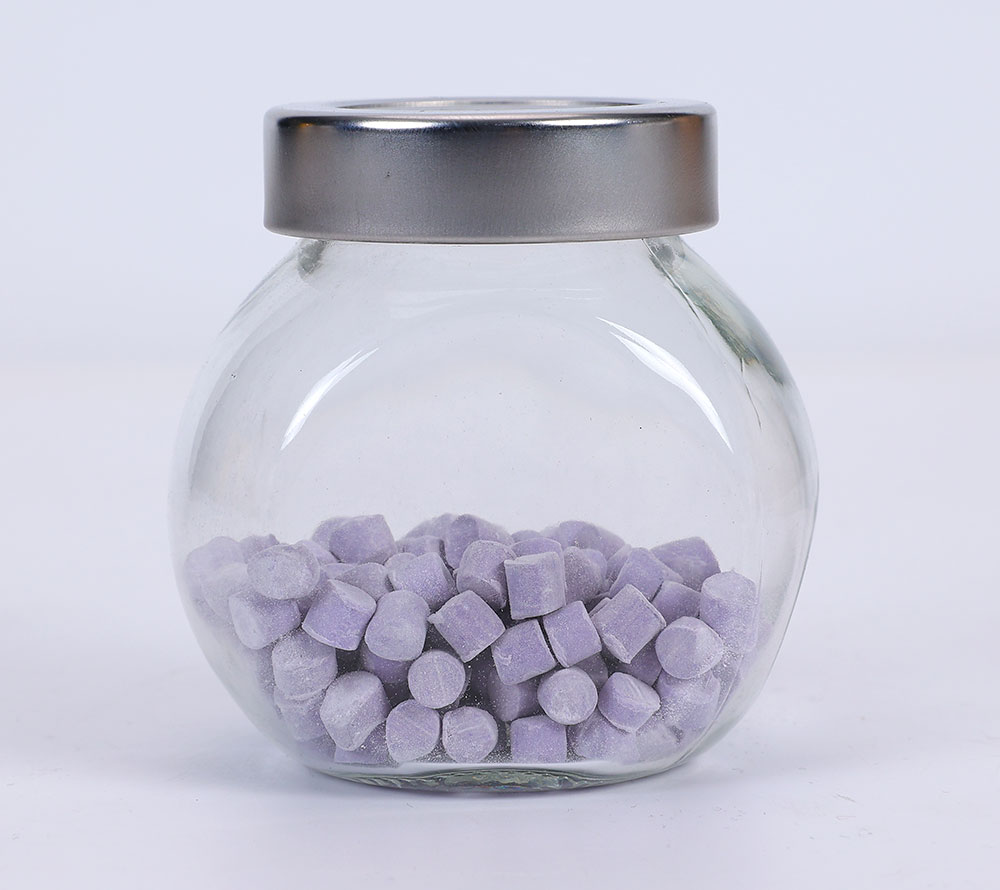
Modern rubber processing commonly adopts pre-dispersed grades like DPG(D)-80/75 to improve dosing precision, ensure clean handling, and enhance dispersion uniformity.
Activation Mechanism of DPG in Sulfur Cure Chemistry
DPG functions as a basic catalyst within the accelerator–sulfur reaction network. Its activation role can be summarized in three technical pathways:
(1) Base Catalysis
DPG increases the nucleophilicity of active intermediates, accelerating the transformation of sulfenamide or thiazole accelerators into their reactive thiolate species.
(2) Stabilization of Accelerator–Sulfur Complexes
DPG helps maintain the integrity of the accelerator–sulfur complex, guiding the formation of efficient crosslinks rather than unproductive side reactions.
(3) Improved Conversion Efficiency
By reducing the required activation energy, DPG ensures faster cure initiation without significantly reducing scorch safety—an essential balance for high-shear mixing environments.
This chemistry explains why DPG is indispensable in many semi-efficient (SEV) and efficient (EV) curing systems.
Synergy with Thiazoles, Sulfenamides, and Thiurams
DPG displays strong synergistic performance in multi-accelerator packages:
• With Thiazoles (MBT, MBTS)
DPG accelerates cure rate and reduces induction time, creating a more responsive cure system.
• With Sulfenamides (CBS, TBBS, MBS)
DPG enhances the delayed-action properties of sulfenamides, producing predictable t10–t90 profiles and stable cure plateaus.
• With Thiurams (TMTD, TETD)
DPG moderates the extremely fast cure characteristics, enabling better scorch control and improved heat resistance.
Typical phr levels: 0.3–1.0 phr, depending on the application and target cure characteristics.
Using DPG(D)-80/75 further enhances synergy due to its controlled particle size and excellent distribution.
Effects on Cure Behavior and Rubber Performance
DPG influences multiple vulcanization and performance parameters:
• Cure Kinetics
• Faster t90
• Improved cure rate index
• More stable cure plateau
• Reduced risk of under-cure
• Mechanical Properties
DPG-supported systems typically yield:
• Higher modulus development
• Better dynamic stability
• Improved reversion resistance
• Enhanced durability for tires, belts, seals, and molded products
• Processing Advantages
Pre-dispersed grades like DPG(D)-80 help maintain consistent Mooney viscosity and reduce batch variation, contributing to overall production efficiency.
Practical Use Guidelines and Formulation Considerations
To maximize the activation benefits of DPG, several processing principles should be observed:
• Mixing Sequence
Add DPG and the primary accelerator during the final mixing stage to avoid premature activation.
• Temperature Control
Keep masterbatch feeding below scorch-risk temperatures—especially important in high-shear internal mixers.
• Compatibility & Storage
Maintain dry, cool storage conditions to preserve stability.
When switching from powder DPG to DPG(D)-80/75, re-validate phr levels due to the carrier system and active content differences.
DPG’s activation capability makes it indispensable for balancing cure speed, scorch safety, and mechanical integrity in sulfur-based rubber compounds.